Chapter One
The Doberman, briefly.
A working breed shaped at the end of the nineteenth century by a German tax collector named Louis Dobermann. He wanted a companion that could walk a route and discourage trouble. He got something more enduring than that.
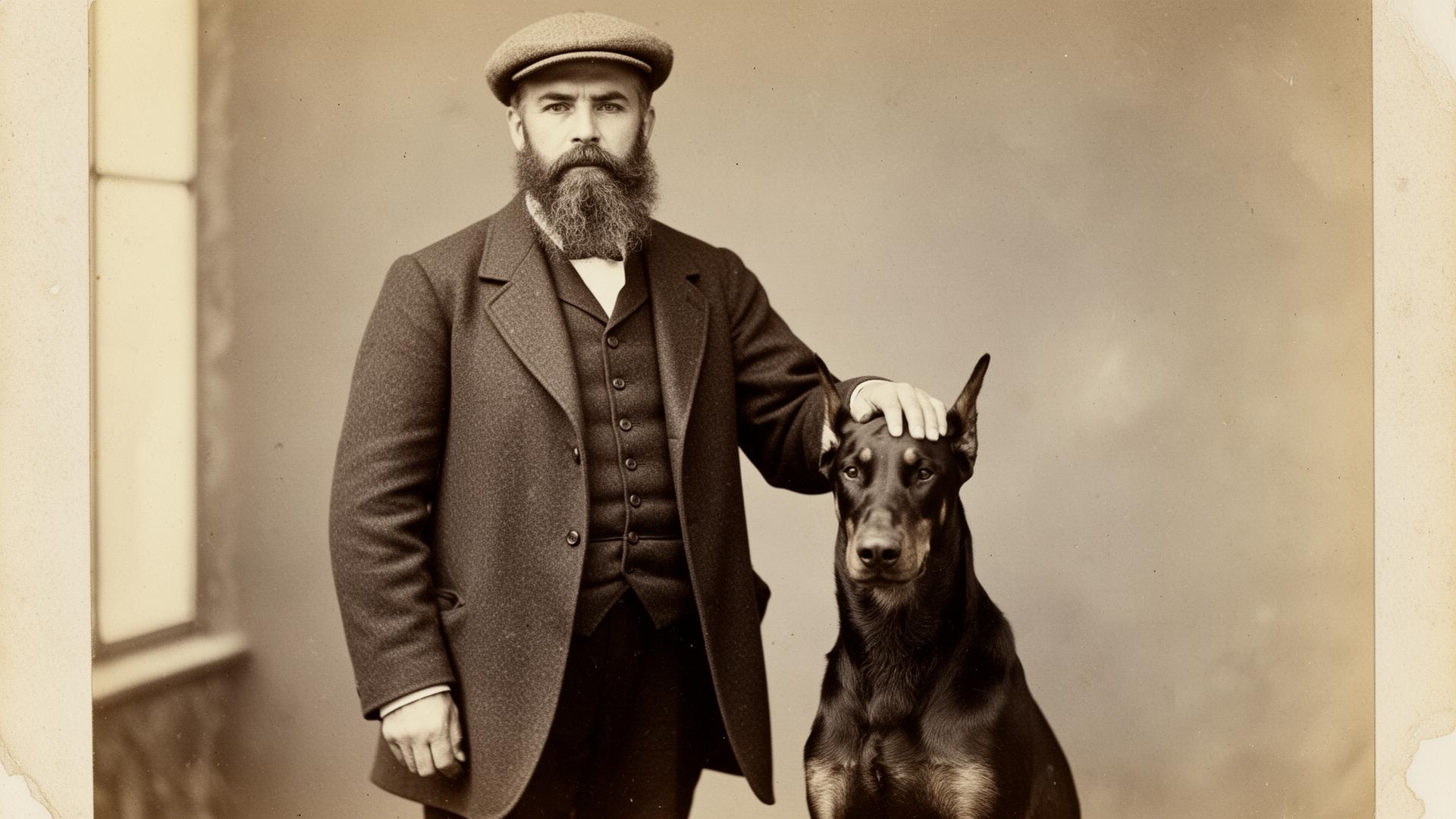
At a glance
- Group
- Working
- Origin
- Germany, ~1890
- Male height
- 26–28 in (66–71 cm)
- Female height
- 24–26 in (61–66 cm)
- Weight
- 60–100 lb (27–45 kg)
- Lifespan
- 10–13 years
- Coat
- Short, single, smooth
- Colors
- Black, red, blue, fawn — each with rust markings
Temperament
A thinking dog, not a reactive one.
The well-bred, well-raised Doberman is steady, watchful, and deeply attached. They are not happy alone in a yard. They are happiest underfoot, with something to do — a job, a sport, a long walk, a long conversation.
- —Loyal almost to a fault — bonded to one or two humans
- —Highly intelligent; ranked among the most trainable breeds
- —Alert and vigilant without being indiscriminately aggressive
- —Athletic and powerful; built for endurance, not bursts
- —Sensitive — responds to tone before commands
- —Velcro temperament; not a backyard dog
Is a Doberman right for you?
A short, honest check.
- 1.Can the dog be with people most hours of the day?
- 2.Will you give an hour of real exercise daily — for a decade?
- 3.Are you willing to train, weekly, for at least the first two years?
- 4.Can you afford breed-appropriate veterinary care, including cardiac screening?
- 5.Do you welcome a dog that will follow you into every room?
Take the quiz →
If you hesitated on more than one, this may not be the breed for now.
Appendix
Breeders & the Z-factor Doberman.
How to vet a responsible breeder — and what to know about the recessive coat dilution sometimes marketed as a "white" Doberman.
Read the appendix →